Aerospace Components
Providing high-hardness, fatigue-resistance, and non-porous metallurgical bonds for flight-critical components operating under high load.
The Challenge and Solutions
Aerospace components must maintain ultra-precise tolerances while operating under high loads and corrosive environments (such as exposure to moisture, salt, or aviation fuels).
Shital Plasma Nitriding is a critical process for enhancing surface integrity, providing the high-hardness, fatigue-resistant, and corrosion-inhibiting properties required for flight-critical applications.
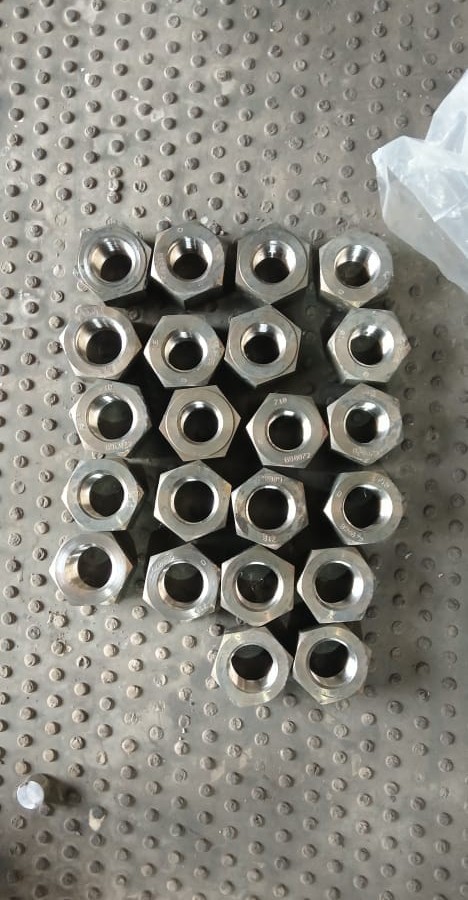
How We Solve Aerospace Component Challenges
| Problem Faced | Mechanism of Plasma Nitriding Solution |
|---|---|
| Scratch Mark | Creates an ultra-hardened surface layer that resists scoring and surface damage during assembly and operation, ensuring structural surface uniformity. |
| Wear & Tear | Significantly boosts resistance to fretting and abrasive wear, extending the fatigue life of high-cycle components like actuators, fasteners, and gear mechanisms. |
| Corrosion of Components | Forms a highly stable, non-porous metallurgical bond that provides excellent resistance to atmospheric corrosion and chemical exposure, essential for airframe and engine longevity [1]. |
Material Specifications for Aerospace Components
Aerospace specifications demand rigorous material control. We focus on high-performance alloys that benefit from nitriding to achieve the necessary surface hardness while retaining the core ductility required for safety-critical aerospace operations.
| Material / Grade | Application Area | Target Surface Hardness | Recommended Case Depth |
|---|---|---|---|
| Nitralloy (1.8550 / 41CrAlMo7) | Precision Gears & Shafts | 1000 – 1150 HV | 0.20 – 0.40 mm |
| 15-5 PH / 17-4 PH Stainless | Structural Fittings & Fasteners | 950 – 1100 HV | 0.10 – 0.20 mm |
| AISI 4340 (High Strength) | Landing Gear & Actuation | 700 – 850 HV | 0.25 – 0.45 mm |
| Inconel (Superalloys) | Heat & Corrosion Resistant Parts | 800 – 950 HV | 0.05 – 0.15 mm |