Defense Components
Forming permanent, high-hardness diffusion layers to safeguard combat ordnance, guidance systems, and heavy drive-train assemblies from high impact and severe field wear.
1. The Challenge and Solutions
Defense components, including ordnance hardware, guidance systems, and vehicle drive-train parts, face high-impact loads and prolonged exposure to harsh elements. Traditional coatings can peel or flake under these stresses.
Shital Plasma Nitriding alters the surface of the base metal itself, ensuring the hardened layer cannot "peel off," providing permanent protection against wear and severe atmospheric corrosion.
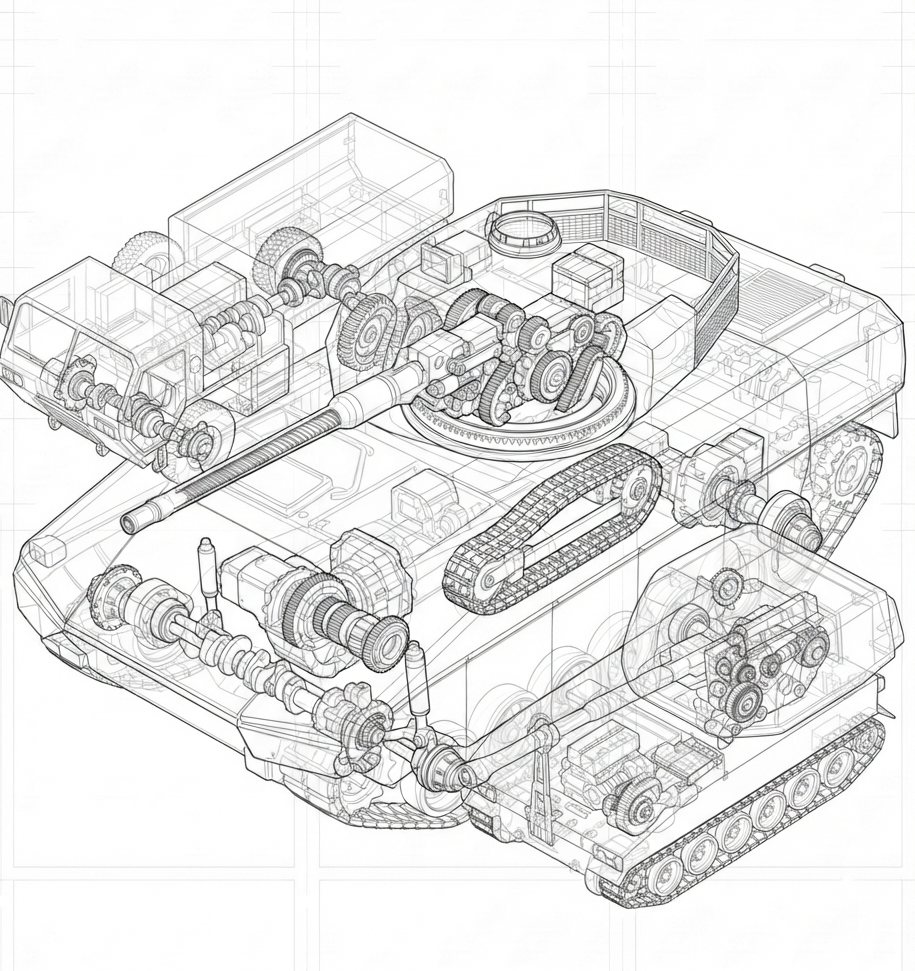
How We Solve Defense Component Challenges
| Problem Faced | Mechanism of Plasma Nitriding Solution |
|---|---|
| Scratch Mark | Produces a superior surface hardness that prevents marring and scoring, maintaining the smooth operation of precision sliding parts and mechanical assemblies. |
| Wear & Tear | Creates an optimized diffusion layer that resists abrasive wear from sand, dust, and continuous high-cycle mechanical operation in the field. |
| Corrosion of Components | Forms a chemically resistant nitride barrier that protects components against moisture, salt fog, and chemical exposure, ensuring reliability without the need for thick, dimension-altering coatings. |
2. Material Specifications for Defense Components
Defense applications often involve high-strength steels capable of withstanding shock loading. The following specifications ensure that these materials achieve the necessary hardness for combat-readiness while maintaining the internal toughness required for impact resistance.
| Material / Grade | Application Area | Target Surface Hardness | Recommended Case Depth |
|---|---|---|---|
| AISI 4140 / 4340 | Gun Barrels & Drive Components | 650 – 800 HV | 0.20 – 0.40 mm |
| Nitralloy (1.8550) | Precision Pins & Shafts | 1000 – 1150 HV | 0.20 – 0.40 mm |
| Stainless Steel (400 Series) | Corrosion-Resistant Ordnance | 900 – 1050 HV | 0.10 – 0.20 mm |
| MDN 250 Grade (Maraging Steel) | High-Strength Structural Parts | 850 – 1000 HV | 0.05 – 0.15 mm |