Glass Industry Moulds
Enhancing thermal shock resistance, surface hardness, and oxidation protection for parison moulds, blow moulds, and glass pressing components.
The Challenge and Solutions
Glass moulding requires moulds that can withstand extreme thermal shock and persistent surface contact with molten glass. The high temperatures involved, combined with the abrasive nature of glass particles, often lead to rapid mould deterioration, resulting in surface defects on the final glass product and the need for frequent, costly mould replacement.
Shital Plasma Nitriding significantly enhances the surface properties of glass moulds, providing the necessary heat resistance and surface hardness to maintain mold geometry and prolong operational life.
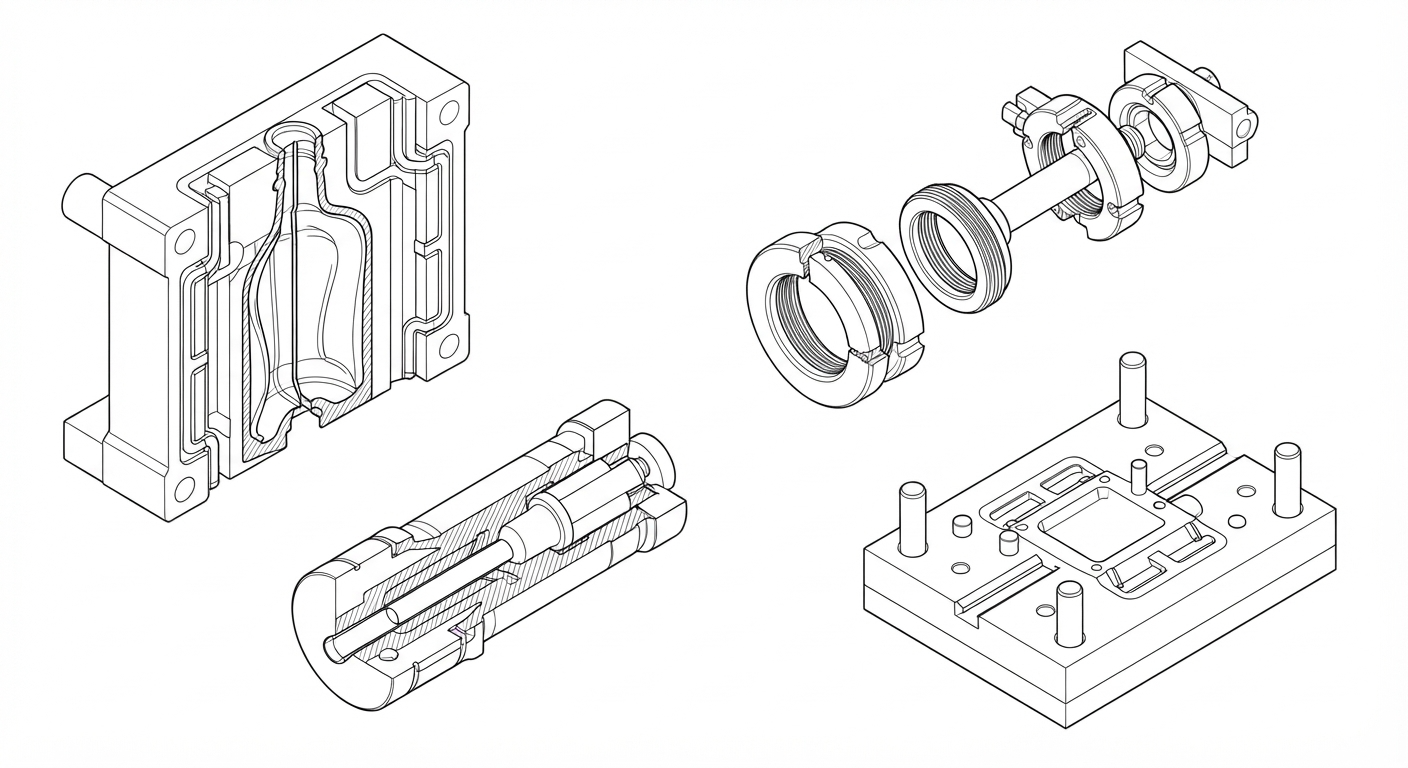
How We Solve Glass Moulding Challenges
| Problem Faced | Mechanism of Plasma Nitriding Solution |
|---|---|
| Wear & Tear | Increases the surface hardness of the mould to combat the mechanical degradation caused by the constant cycles of gathering, pressing, and blowing glass. |
| Abrasion | Establishes a hardened, wear-resistant diffusion zone that resists the scouring effects of glass contact, maintaining the required surface finish for the product. |
| Corrosion of Dies | Forms a stable, dense nitride layer that acts as a protective barrier against oxidation and chemical reaction with molten glass constituents at elevated temperatures. |
Material Specifications for Glass Industry Moulds
Glass moulds require materials that maintain their properties under sustained high-temperature operation. The following specifications represent standard practice for surface hardening these tools to ensure better release properties and longer service life.
| Material / Grade | Application Area | Target Surface Hardness | Recommended Case Depth |
|---|---|---|---|
| Cast Iron (GG25/GG30) | Parison & Blow Moulds | 600 – 750 HV | 0.10 – 0.20 mm |
| Ductile Iron (GGG40/50) | High-Stress Mould Components | 650 – 800 HV | 0.15 – 0.25 mm |
| Stainless Steel (420/431) | High-Precision Inserts | 900 – 1050 HV | 0.10 – 0.20 mm |
| H13 (1.2344) | Plungers & High-Heat Components | 950 – 1100 HV | 0.15 – 0.25 mm |
| P20 (1.2311 / 1.2312) | Mould Bases & Cavities | 750 – 900 HV | 0.20 – 0.35 mm |
| S7 (1.2357) | Slides & Moving Components | 850 – 1000 HV | 0.20 – 0.30 mm |